 Review
Who Is Still Alive
Nine Gazans recount their lives before and after October 2023: a stark, harrowing documentary.
Will there ever come a day when the people of Gaza can return to their own land and get back the lives they had before, without famine or bombs?
Who Is Still Alive is a documentary that bears witness to the lives of nine Palestinians before and after the airstrikes of October 2023, and to how their lives have changed since. In the film, the Gaza Strip is divided, in an abstract way, into as many municipalities as there are witnesses, so as to portray not just one part of the population but people of different ages, social backgrounds and home towns, and to show that their lives will never be the same.
The director first travelled to Palestine in the 1990s and saw with his own eyes how the Strip deteriorated over the years. He kept in touch with friends there, and the Palestinian cause has always been close to his heart. But the spark for the film came when he first spoke to Adel and Jawdat (who went on to become protagonists of the film), who had fled to Cairo to find shelter, like most of the witnesses. That is when he felt the need to give a voice to these people who had lost the lives they once had. What makes the film authentic is precisely that these are people who truly lived through the airstrikes, who watched friends, relatives and family members die, and who were lucky enough to get past the checkpoints and escape a hellish existence of famine and endless displacement from one camp to the next.
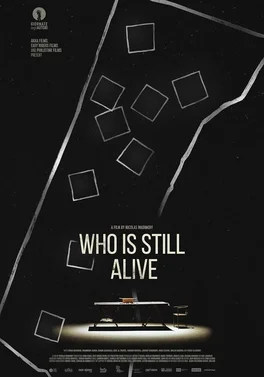
The film’s message is clear: there will be no going back to the Gaza of before. The director deliberately chooses not to show the enclave through archive footage, nor to shoot in cities that might resemble it, because he knows full well that no place can truly stand in for it, and that no one knows what Gaza will become in the years ahead. So he opts for a stripped-back setting of dim lighting, a black floor and a white brush, offering no landmarks and keeping the focus on what happened, capturing the emotions and state of mind of the witnesses.
The protagonists don’t dwell only on infrastructure or material possessions, but above all on the lives they had before, made of daily routines, social ties and people they will never see again, either because those people were killed in the war, or because they themselves will never be able to return.
This documentary can’t be judged like just any film: its actors aren’t real actors, and the story rests entirely on what they lived through first-hand. That said, the message, clear from the very start, is repeated several times in different forms, when the audience already knows what comes next, and nothing new is added. That risks blunting the impact of a subject that is deeply harrowing and still painfully current.
I saw the film at a preview screening at the Institut du monde arabe in Paris, and was lucky enough to stay for the Q&A with Nicolas the director and Adel afterwards, which brought the cause even closer to home for the audience. In some ways it is a unique piece of storytelling, one that sets out to raise awareness, but you’ll need patience to watch it: it can be slow, harrowing and often repetitive.