 Review
Fjord: Progressive, But Only One Way?
Norway prides itself on being progressive, but Fjord shows how fast that tolerance curdles into judgment of a family's different culture. My review
What if the people who call themselves progressive were the ones who most needed a refresher on respecting a culture different from their own?
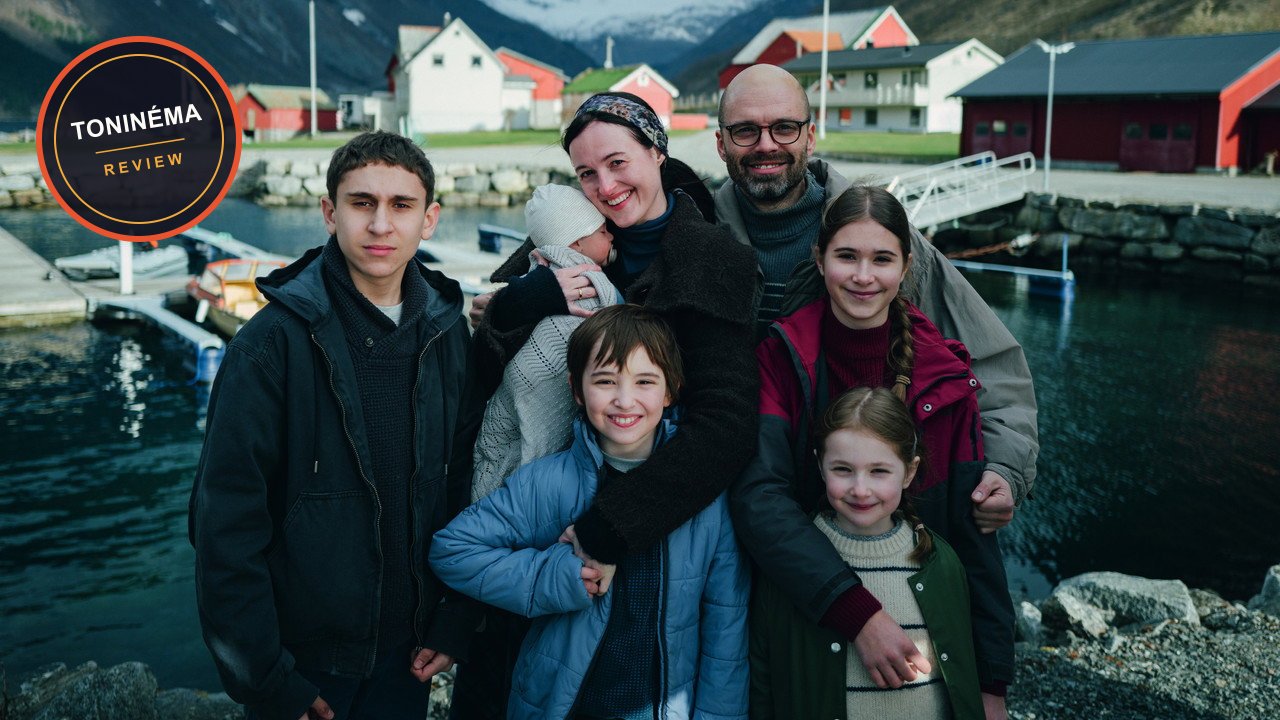
A Romanian-Norwegian couple settles in a small Norwegian village with their five children. The older kids start joining local life — school, sports practice — and slowly begin to notice that the way they were raised doesn't quite match their peers'. It's even more visible with their parents: the father, Mihai Gheorghiu, struggles to fit in with how his colleagues operate, and so does his wife, Lisbet Gheorghiu, despite her own Norwegian roots. Things turn sour when someone on the school staff discovers a bruise on the body of their eldest daughter, Elia.
That's where the film really gets going — and where we start to see that even among Norwegians, people from the same community, raised the same way, there's hesitation around the principal's table over whether to actually call in social services to address possible child abuse, because no one truly knows the couple or the dynamic behind the bruise.
The two things worth unpacking here are education and open-mindedness — and they're not separate threads, they're constantly tangled together. Education is the real nerve of the argument: the Gheorghius, not being Norwegian, raised their kids on a strict religious upbringing — prayer, Bible readings, Sunday mass, and a long list of rules that can look bizarre if you're not a believer. The Norwegian community, on the other hand, seems to use the bruise as an excuse to spotlight the family's supposedly outdated parenting, which clashes with a modern society where teenagers use the internet freely.
Who are you to tell me how to raise my kids? That's the second thread. Norway is known as one of the most advanced, developed nations, economically and culturally — but what I saw in this film was a distinctly closed mind. Maybe it's the fjord itself, a village cut off from the rest of the world: even the school principal, who's the Gheorghius' neighbor, openly criticized the family's way of life with his wife, and the caseworker who took the children in blamed the parents for not knowing YouTube or the internet at all. Meanwhile, almost no one stopped to ask whether the parents actually loved their kids and were only doing this for their sake.
I watched this film in Paris a few weeks after it came out, and coming from a family in southern Italy, I can tell you I got slapped and spanked as a kid (and I wasn't the only one in my generation) — but that was never abuse, just a last resort when I'd done something forbidden, or a way to make me understand how serious it was. So once again: context matters, and so does the upbringing you come from.
It's a film that takes some effort to stay locked into for the first half hour, but once you're past that, it plays well — plenty of emotion and questions that follow you through it, and especially once you walk out of the theater.
Final verdict: 7.5